Newport Beach Neighborhoods
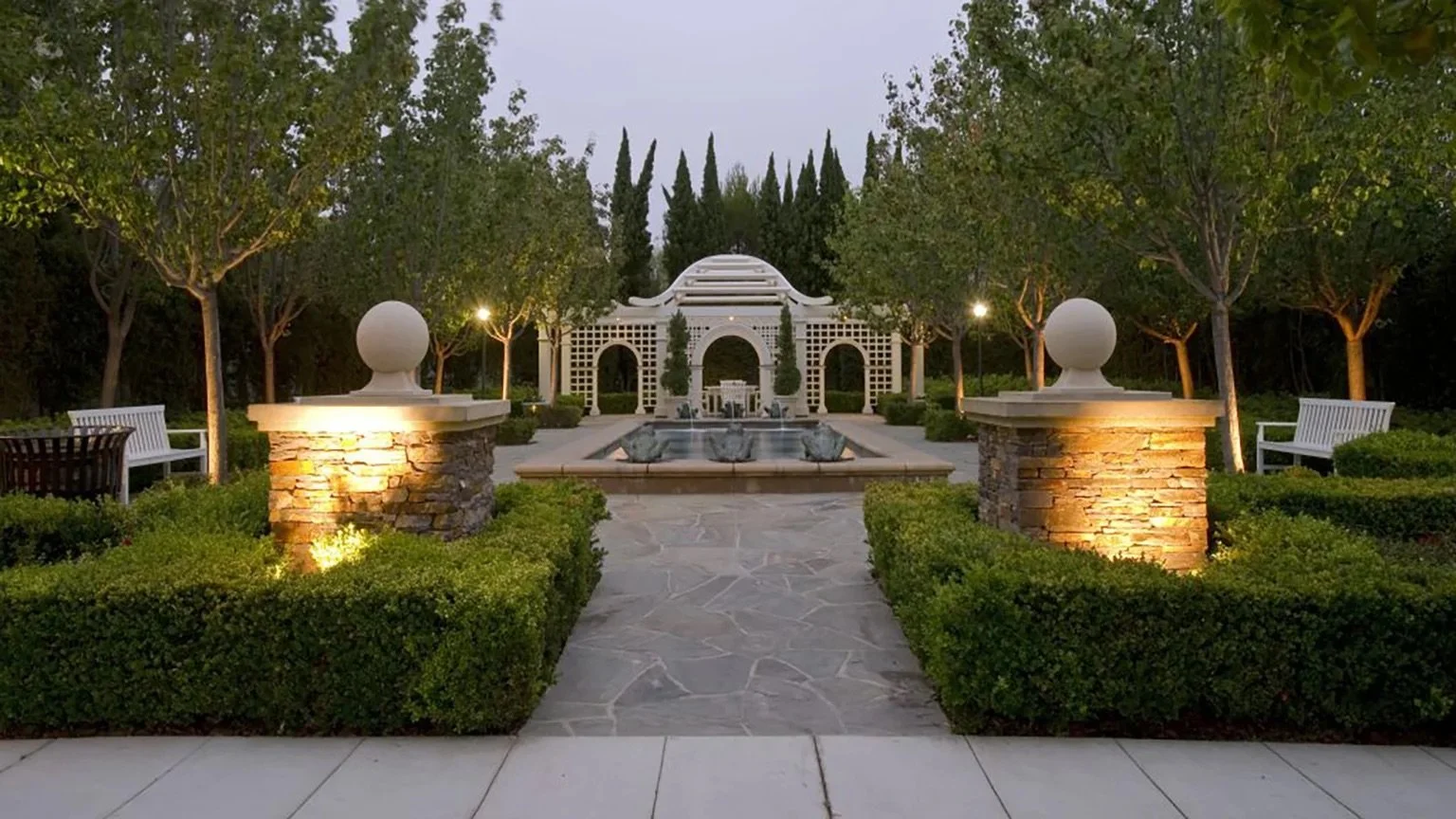
Photo credit: Bemus Landscape [Photograph].
The Price of a More Complete Package.
By NJ Johnson | Updated October 22, 2026
One Ford Road offers a different purchase equation from an older home that needs a substantial renovation: a planned, gated neighborhood with detached homes and shared recreation spaces. That can be appealing. It does not make every house turnkey.
The project’s architect, MVE + Partners, identifies Pacific Bay Homes as the client and describes a master plan linking homes with parks, greenways and open space. Its documented amenities include gardens, putting greens, walking trails and recreation areas. Landscape designer Verde Design Group also documents pools, a clubhouse, a basketball court and a loop walk.
Those shared features are part of what you are comparing with other neighborhoods. Evaluate how often you will use them, what access rules apply and how the association funds their upkeep.
Start the cost analysis with the property’s current HOA statement and resale disclosures. Review the budget, reserves, insurance and any special assessments. A fee quoted in a prior listing is not a promise about the assessment you will pay, and a ZIP-code-wide claim about the “highest dues” requires a much broader comparison than one listing provides.
The same rule applies to taxes. Confirm any Mello-Roos or other special assessments on the actual parcel’s tax bill and disclosures. Do not infer their presence or absence from the neighborhood name.
Inside the house, inspect the building systems, roof, drainage and renovation history. Newer construction can still require significant maintenance. An attractive interior does not establish that the expensive work is finished.
Finally, compare recent sales of homes with similar layouts, lots and condition. Asking prices and neighborhood medians cannot substitute for that work. If the goal is a more complete package, I help buyers establish what is genuinely included—and what remains on their own budget.